
Water Eject 💧 Sound: Free Tool to Get Water Out of Your Phone

Tap EJECT WATER NOW to start the free cycle.
Preparing frequencies…
English · Water Eject Sound
Free water eject sound for wet phone speakers
Got water in your speaker? Play the water eject sound above — volume at maximum, speaker facing down. Calibrated low-frequency audio vibrates the speaker membrane and helps push droplets out of the grille. It works in your browser on iPhone and Android. No app install, no account.
This is the same Ejetarágua tool you already know: free first cycle, then optional multi-frequency continuation if moisture is stubborn. Use it right after a splash, rain, or swim — waiting only gives water more time to settle deeper in the acoustic channel.
How a water eject sound clears a speaker
Phone speakers move a thin membrane to make sound. When water sits against that membrane or the grille, audio turns muffled or crackly. A controlled tone in the low-frequency range (roughly 145–600 Hz, with strong effect near ~165 Hz) increases membrane travel. That motion breaks surface tension and helps liquid leave the opening — the same idea behind Apple Watch Water Lock after a swim.
- 1Max volume mattersWeak playback barely moves the membrane. Turn the phone all the way up before you start.
- 2Built-in speakers onlyDisconnect Bluetooth headphones and speakers. If audio routes elsewhere, the wet grille never vibrates.
- 3Grille facing downGravity and vibration work together. Hold the phone so droplets can fall out of the mesh.
Step-by-step: get water out of your phone speaker
- Unmute and max volume. Check the side mute switch on iPhone.
- Disconnect Bluetooth. AirPods and paired speakers steal the signal.
- Press EJECT WATER NOW. Run the free water eject sound cycle with the speaker pointed down.
- Test with a song or voice memo. If it still sounds muffled, continue with the next frequencies on the timeline or repeat after a short rest.
Skip rice and hair dryers. Rice sheds starch into ports; heat can damage adhesives and seals. Sound-based ejection targets the acoustic path without opening the device.
ejetaragua.com has been cited editorially by six of the largest media outlets in Brazil and worldwide.

"The definitive guide to removing water from the speaker and saving your device"
Read article →
"The engineering protocol to save hardware and eject water from the speaker"
Read article →
"Water Eject becomes the viral trick among celebrities to save phone audio"
Read article →
"How to remove water from an iPhone simply and effectively"
Read article →
"Sound that removes water from phones becomes a celebrity trick and can save audio after the pool"
Read article →
"How Sound Can Eject Water From Smartphones and Tablets"
Read article →When to use this water removal sound
Use it as soon as the speaker sounds wrong after liquid exposure: sink splash, rain, pool, sweat, or a drop in shallow water. IP67/IP68 ratings mean the phone can survive immersion under lab conditions — they do not mean the speaker grille stays dry.
If the device was fully submerged, power it off when you can, dry the exterior, run the water eject sound for the speakers, and give the phone quiet dry time (silica gel helps residual moisture). Charging-port “liquid detected” warnings need air-drying time; sound ejection does not replace that for the connector.
Frequently asked questions
What is a water eject sound?
It is calibrated audio — usually a low-frequency tone or short sweep — played through your phone’s speaker so the membrane vibrates hard enough to help push water out of the grille. This page plays that sound in the browser. Apple’s Watch Water Lock uses the same physical idea after swimming.
Is this water eject sound safe for my phone?
Yes, when you use short cycles at normal music-level frequencies. We stay roughly in the 145–600 Hz band, which speakers reproduce every day. Do not use headphones, and avoid running max volume for many minutes straight — one or two focused cycles are enough for most wet-grille cases.
How do I get water out of my phone speaker?
Max volume, Bluetooth off, mute off, press EJECT WATER NOW, hold the speaker down, then test audio. Repeat or continue the longer multi-frequency steps if it is still muffled. For board-level damage or a dead phone after salt water, see a repair shop.
What frequency removes water from speakers?
Most DIY and product tools focus on low frequencies. Around 165 Hz often sits near useful membrane travel for compact phone drivers; sweeping a wider low band covers droplets in different positions. A single random bass song is less reliable than a clean, stable signal.
Does it work on Android and iPhone?
Yes. Any modern browser that can play audio works — Safari or Chrome on iPhone, Chrome and others on Samsung, Pixel, Xiaomi, Motorola, and more. Dual-speaker phones may need a second pass with the phone oriented toward each grille.
Should I put my phone in rice?
No. Apple and independent tests have shown rice is a poor desiccant and can leave starch in openings. Prefer air-drying, silica gel for residual moisture, and a water eject sound for the speaker path.
How many times should I play it?
Light splash: one free cycle is often enough. Heavy exposure: two or three cycles, or continue through the multi-frequency steps. If audio is still wrong after drying time, stop and get hardware checked — corrosion is not fixed by more sound.
Water Eject shortcut vs this online tool?
An iOS Shortcut can trigger similar tones if you build one. The online tool needs no setup: open the page and press play — useful when the phone is already wet and you do not want to configure Shortcuts first.
Water in the speaker vs water in the charging port
Muffled or crackling playback usually means moisture in the speaker or microphone path — that is where the water eject sound helps.
“Liquid detected” on charge means conductivity at the connector. Unplug, tilt the port down, wait until the warning clears, and do not force charging. Sound ejection does not dry USB-C or Lightning pins.
If both happened, dry the port passively first, then run the speaker cycle. Never poke metal into ports or speaker mesh.
What not to do
- !No riceWeak drying power; starch dust can clog mesh and ports.
- !No hot airHair dryers and ovens warp seals and risk display damage.
- !No sharp objectsPins and needles destroy membranes and connectors.
Recent articles
See all →
Water in Your Phone: Emergency Steps That Actually Help
First-minute protocol for water in a phone — then play the free water eject sound. No rice, no heat.
Read more →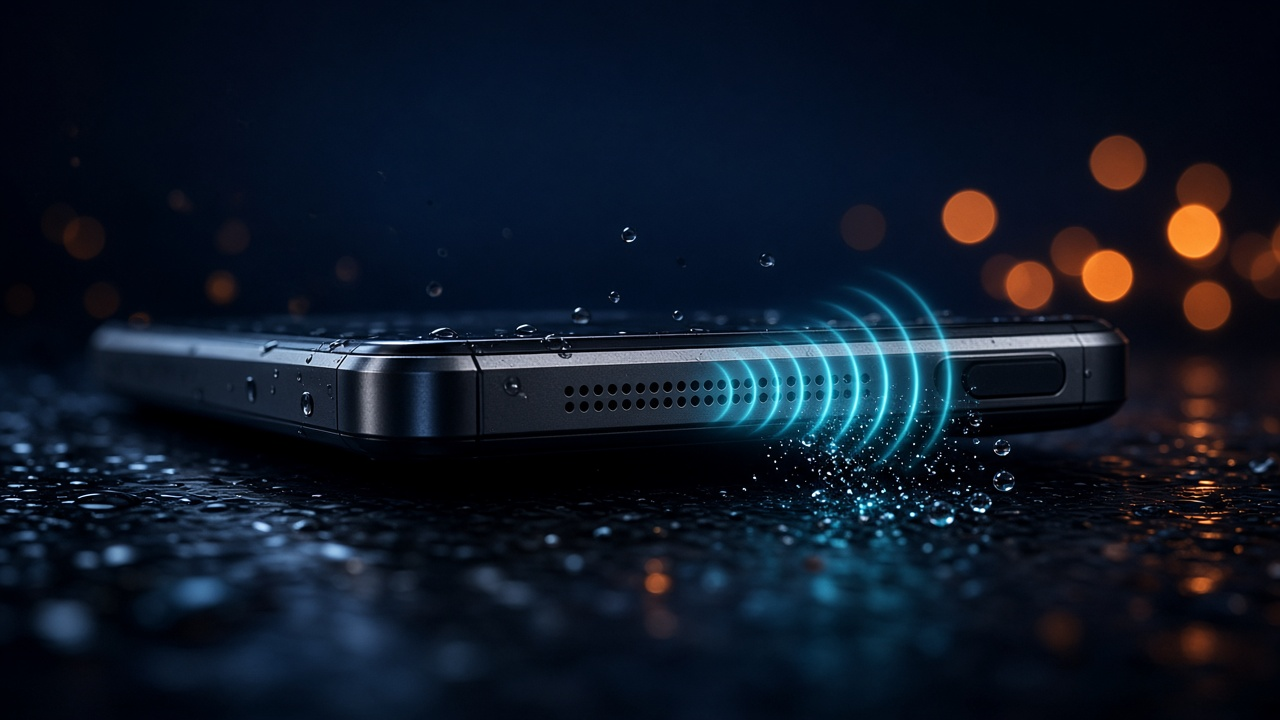
Water Eject Sound: Clear Water From Your Speaker Online
What a water eject sound is, how low-frequency audio helps, and how to use the free browser tool.
Read more →
Does Rice Work on a Wet Phone? Why the Myth Fails
Rice is weak, sheds starch, and delays real fixes. What to do instead — including water eject sound.
Read more →
Muffled Sound After Water: How to Fix a Wet Speaker
Quiet or crackly audio after water is usually moisture in the grille — clear it with sound ejection.
Read more →
Water Eject on iPhone: Speaker Water & Liquid Detected
No system-wide Watch-style eject on every iPhone — use the free Safari tool and dry Liquid Detected ports correctly.
Read more →Why sound works
Calibrated audio makes the speaker vibrate at the right frequency and pushes water out of the grille — no heat, no objects, no risk of piercing the membrane.
-
1
Fix it at home, in minutesReplacing or repairing a speaker often costs a lot. Here you act now, in the browser.
-
2
Better than the “rice trick”Rice barely dries audio channels and still sheds starch that can clog the grille.
-
3
Acts now, without heatNo hair dryer or objects in the holes: only controlled vibration from the speaker itself.
Compatible devices
Models, brands and systems
Models, brands and systems compatible with the Water Ejector
| Model | Status |
|---|---|
| iPhone | Compatible |
| Apple | Compatible |
| Samsung | Compatible |
| Xiaomi | Compatible |
| Redmi | Compatible |
| Poco | Compatible |
| Motorola | Compatible |
| LG | Compatible |
| Android | Compatible |
| iOS | Compatible |
| Tablets | Compatible |
| iPads | Compatible |
| Smartwatch | Compatible |
| Apple Watch | Compatible |
Last updated: September 26, 2026